Unreal Engine 5 combat system
Built as a focused melee prototype with responsive interactions, clear feedback, and expandable gameplay logic.
Project Case Study // Combat Systems
This project is a melee combat prototype developed in Unreal Engine 5, focused on responsive sword-based gameplay, enemy interaction, and readable combat feedback. The system combines player attacks, hit detection, damage response, and AI behavior into a structured gameplay loop designed to feel reactive and polished.
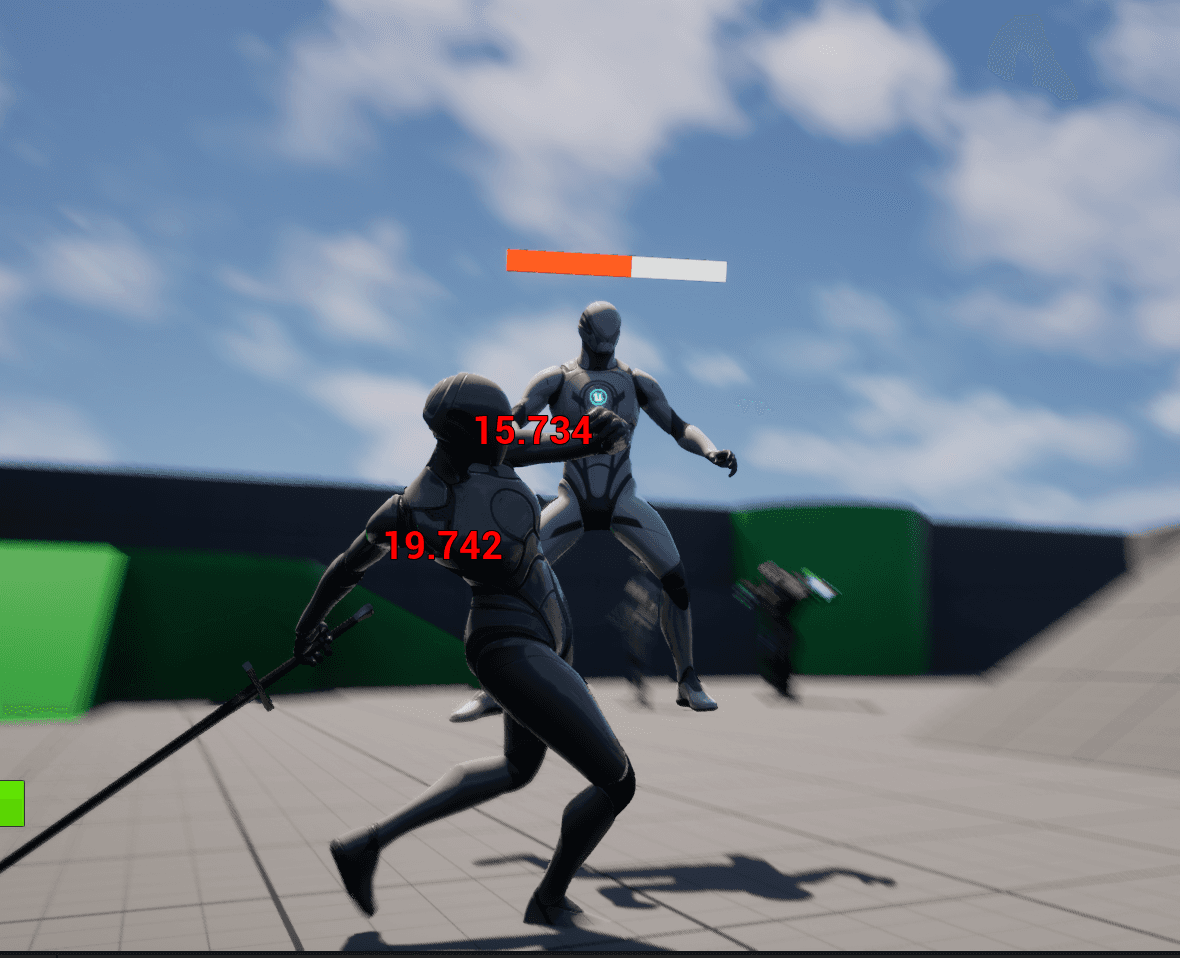
System Overview
The prototype was built in Unreal Engine 5 using Blueprints as the primary gameplay scripting layer, allowing the combat loop to be structured around readable event-driven logic. Player attacks, damage application, reactions, and state updates are all coordinated through interconnected systems that prioritize responsiveness and clean handoff between actions.
Behavior Trees and Blackboards were used to organize enemy decision-making into readable states such as patrol, detect, chase, and engage. This created a reliable foundation for reactive enemies that transition naturally from ambient navigation into combat behavior while keeping awareness and targeting data synchronized.
Animation-driven attack logic made the system feel intentional. Attacks are tied to animation events so traces, damage windows, and combat responses happen at deliberate moments, improving combat readability and reinforcing clean transitions between idle, pursuit, attack, reaction, and recovery.
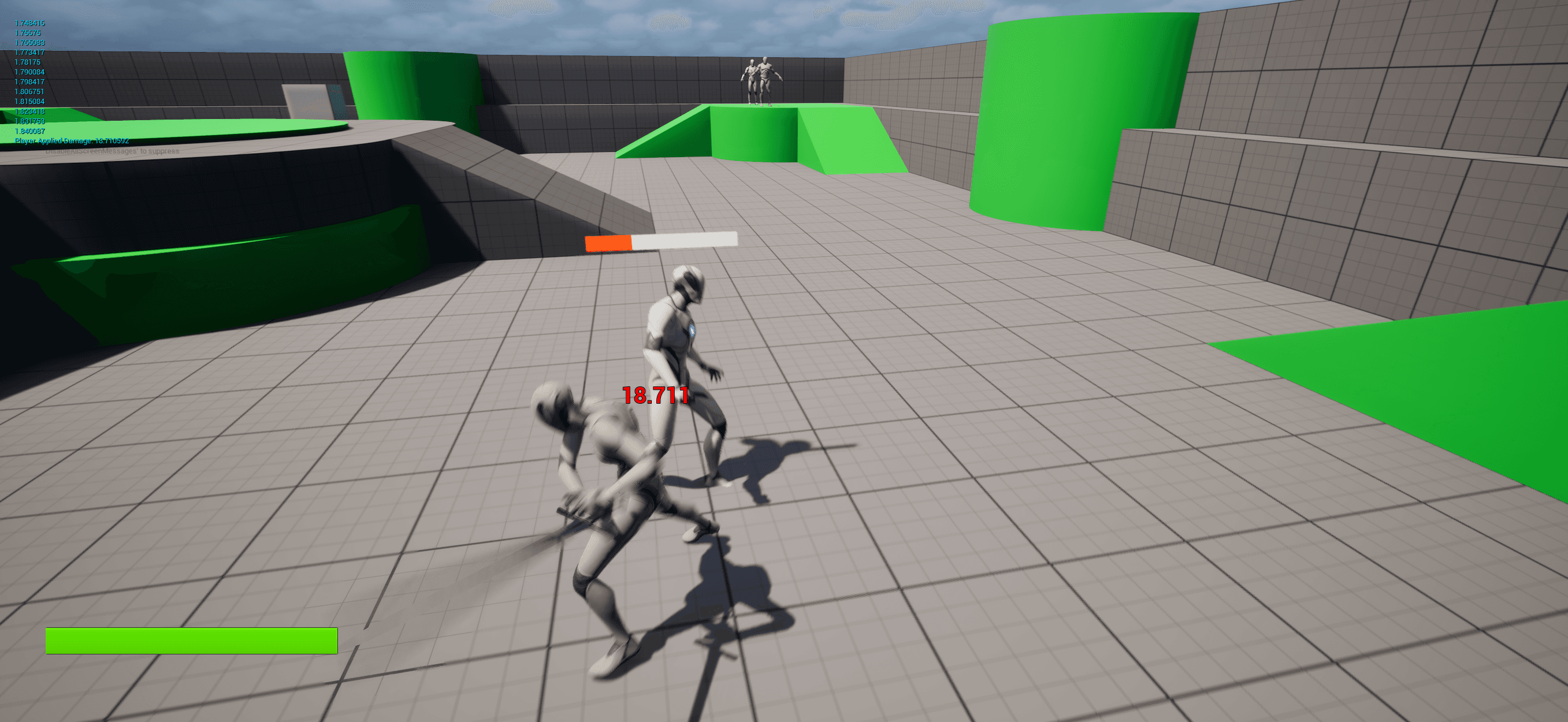
Visual Archive
Core Interaction
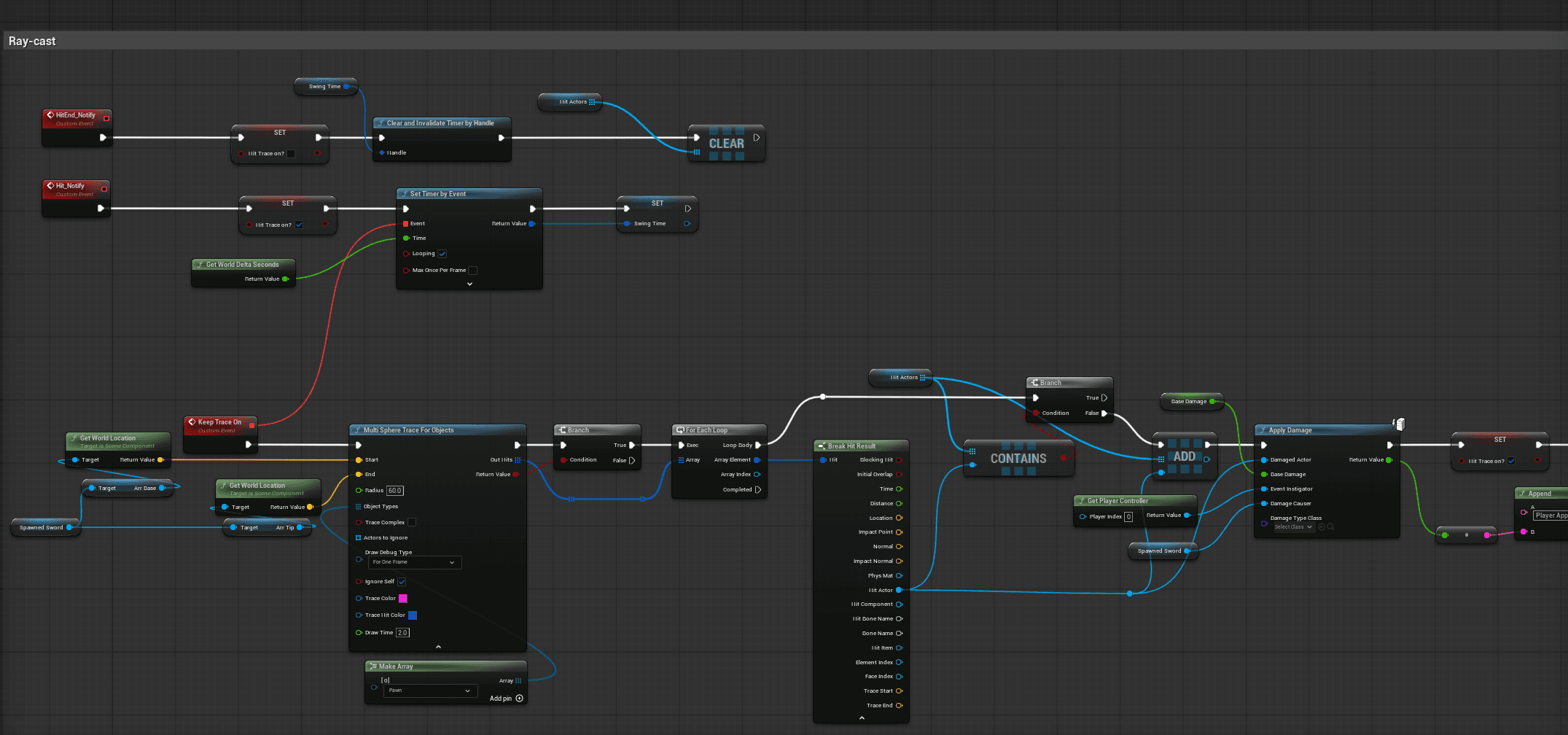
The gameplay layer was built around a readable attack flow that starts with animation timing and resolves through hit detection, damage application, and enemy response. Combat windows are controlled so traces only activate during intended swing moments, helping every attack feel deliberate rather than noisy or inconsistent.
Hit detection feeds into damage response and combat feedback systems that make every strike understandable to the player. Health updates, reaction logic, and impact handling were structured to support clarity so players can quickly understand when an attack connected and how the enemy responded.
Responsiveness remained the main priority throughout the prototype. The result is a combat loop that feels immediate while staying legible, with smooth transitions between attacking, confirming hits, and returning to the next gameplay decision.
Decision Flow

Enemy behavior was structured around a clear patrol to detect to chase to attack flow, giving encounters a readable escalation from passive movement into direct engagement.
Behavior Trees were used to organize branching decisions, while Blackboards stored the context AI needed to react to the player, manage targeting, and shift between combat states. This kept the system modular and easier to tune than one monolithic graph.
Clean state transitions were central to the design. Enemies move from patrol into awareness, then pursuit and attack, while combat reactions feed back into those states in a controlled way so the loop remains stable, readable, and expandable.
Project Breakdown
Built as a focused melee prototype with responsive interactions, clear feedback, and expandable gameplay logic.
Structured core combat flow through readable Blueprint scripting to keep systems flexible and iteration-friendly.
Used tree-based decision making to separate combat choices into manageable AI behaviors.
Centralized awareness, target context, and combat conditions to support dependable AI transitions.
Organized patrol, detect, chase, and engage states into a consistent combat encounter loop.
Connected hit detection, health updates, and reaction feedback to make every successful strike readable.
Tied attacks and reactions to animation timing so combat actions resolve with better rhythm and clarity.
Toolchain
Playback
Next Destination
Return to the main portfolio to explore the rest of the work, the full visual archive, and the contact section.