Accurate hard-surface vehicle modeling
Focused on proportion, silhouette control, and clean panel transitions to capture the Supra's iconic form.
Project Case Study // Vehicle Pipeline
This project is my 3D interpretation of the Toyota Supra MK4, created using reference images to match proportions, shapes, and iconic design elements. I focused on achieving clean hard-surface topology, accurate curves, and a complete structure that includes both the exterior and interior components. The goal was not just visual accuracy, but creating a model that is efficient, smooth, and suitable for real-time use.
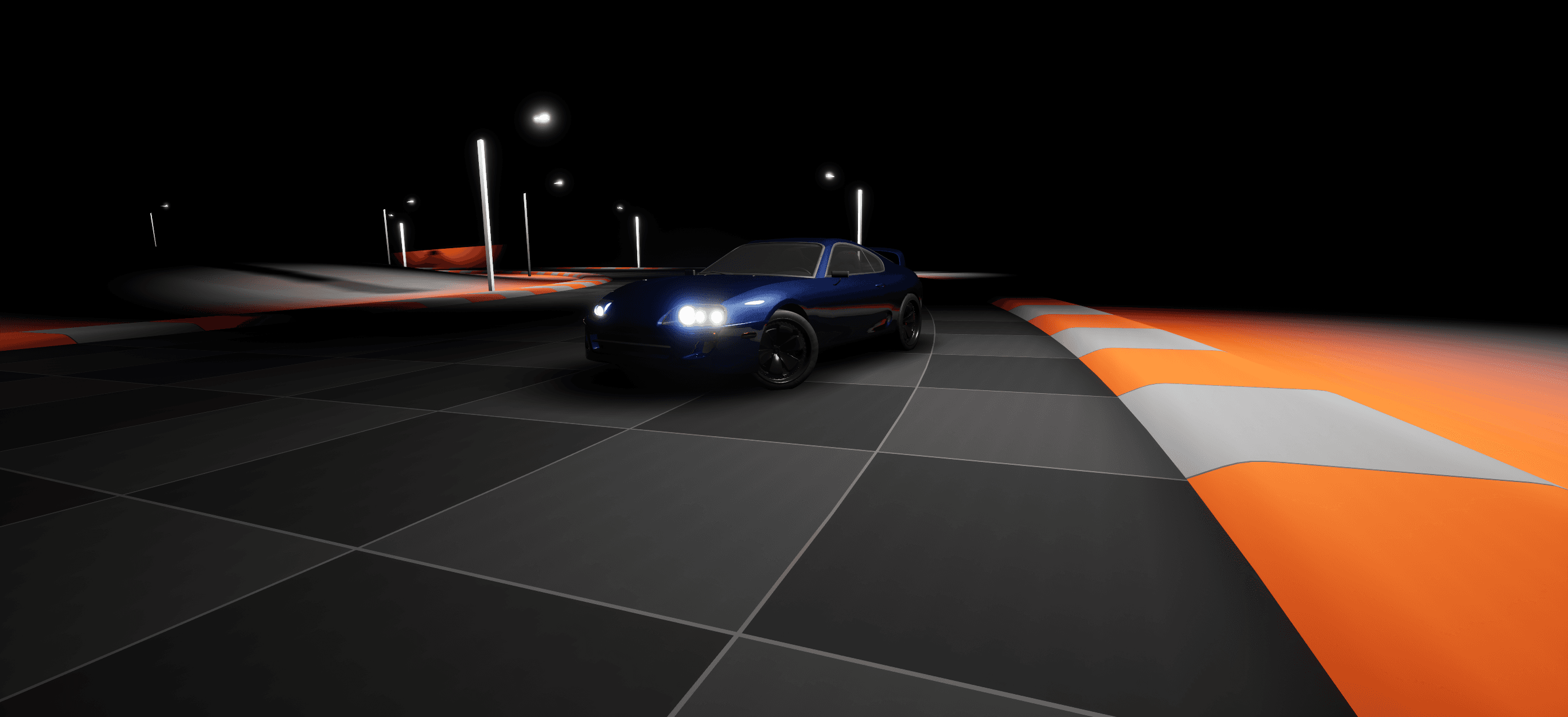
System Overview
Working on the Supra helped refine my workflow for automotive modeling, improve edge-flow decisions, and strengthen my understanding of how to prepare high-detail assets for game engines.
The asset was built to hold up in both cinematic presentation and technical review, with attention placed on silhouette, surface control, and the relationship between modeling accuracy and real-time performance.
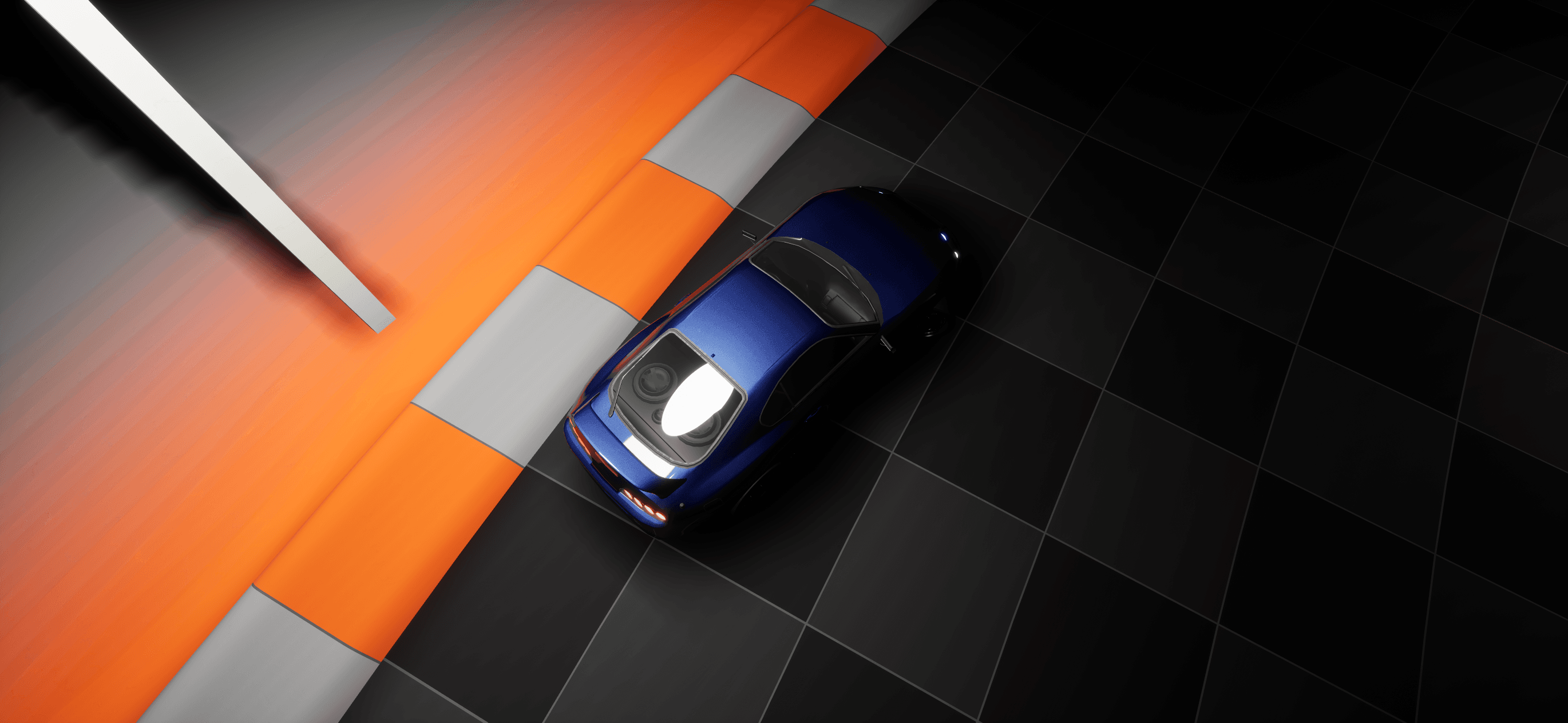
Visual Archive
Technical Implementation
After finishing the model, I brought it into Unreal Engine 5 and set it up using the Chaos Vehicle System to make the Supra fully drivable.
I configured wheel setups, suspension behavior, mass distribution, friction curves, and engine settings to achieve a realistic driving feel. That process taught me how vehicle physics behave inside Unreal Engine, how different parameters affect handling, and how to optimize a model for real-time movement.
Making the car drivable gave me practical experience in technical implementation, physics tuning, and gameplay-focused asset integration.
Preparation Pipeline
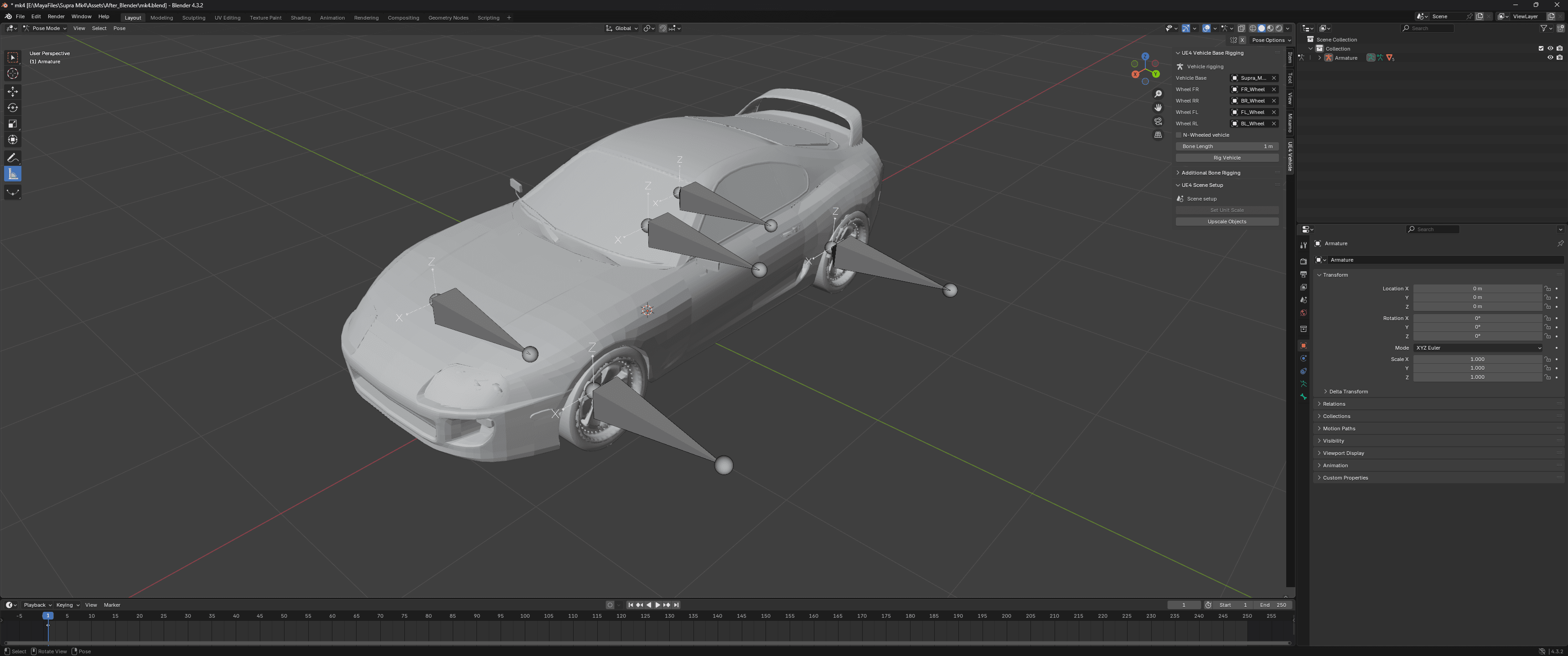
Before bringing the car into Unreal Engine, I ensured the model was prepared with a clean and functional rig. I rigged the wheels, steering, and essential movable parts directly inside the software using built-in tools.
This included setting up pivot points, wheel rotations, steering axes, and hierarchy cleanup to make the mesh ready for animation and engine import.
The rigging process helped me understand how vehicles should be structured for game engines and how proper preparation directly improves the in-engine driving experience.
Project Breakdown
Focused on proportion, silhouette control, and clean panel transitions to capture the Supra's iconic form.
Built beyond the shell so the asset holds up in close-up cinematic shots and technical review.
Structured the model for efficient import, interaction, and rendering inside a game engine workflow.
Prepared wheel rotation, steering behavior, and hierarchy alignment for predictable in-engine control.
Integrated the model into a playable setup while preserving presentation quality and technical reliability.
Adjusted driving parameters to explore suspension response, stability, grip, and overall vehicle feel.
Toolchain
Playback
Next Destination
Return to the main portfolio to explore the rest of the work, the full visual archive, and the contact section.